




We work with senior leaders, in partnership and in confidence.
As regulation is tightening, assurance expectations are rising and investors are asking for clearer links between strategy, capital and measurable outcomes. The question is how to keep them readable and decision-useful without turning them into compliance documents.
What is changing
More visuals, less blocks of text
Reports are not getting shorter, but they are getting more visual. The volume of photos and infographics rose across the period, by 19% and 28% respectively, with most of the uplift in sustainability, strategy and stakeholder sections. Visuals are replacing dense narrative, often to present assurance-ready tables aligned to CSRD and ESRS.
Leadership letters are more forward focussed
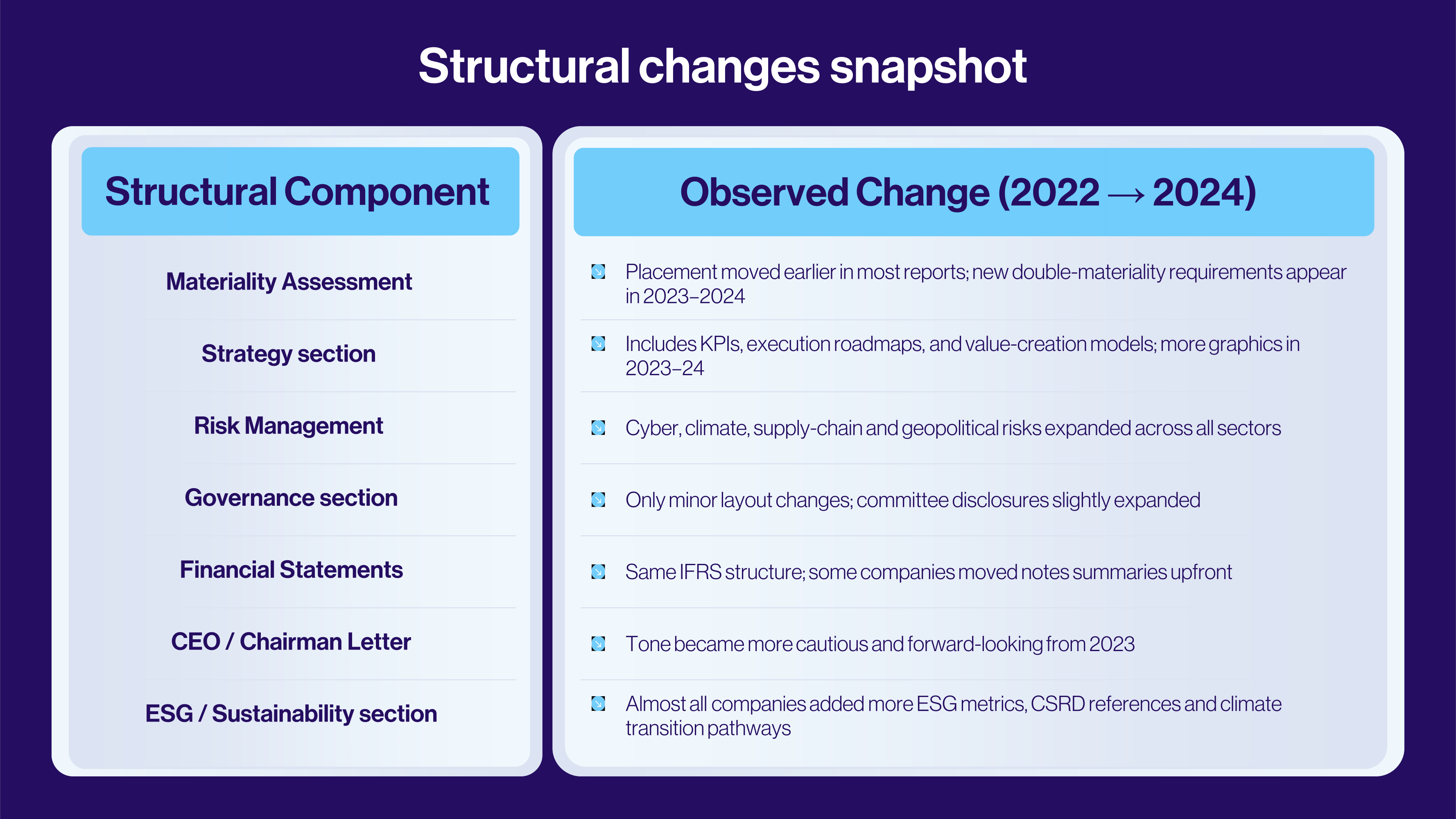
CEO and chair sections are less filled with crisis-era narrative and more grounded in regulation, targets and progress. We have seen more reference to CSRD (although this will naturally lessen this year) and the EU Taxonomy, tighter language around multi-year goals and fewer restatements of the original strategy. Execution capabilities and competitive advantages underpin capital deployment strategies within the context of a multi-year strategic plan.
Structure is more aligned
Materiality appears earlier and more consistently, including double-materiality assessments from 2023. Strategy sections are larger and clearer, with KPIs, execution roadmaps and value-creation models presented as graphics. Risk sections have expanded coverage of cyber, climate, supply chain and geopolitics. Governance and financial statement structures remain broadly stable, with a handful of issuers pulling note summaries forward.
Language is becoming more precise, but buzzwords persist
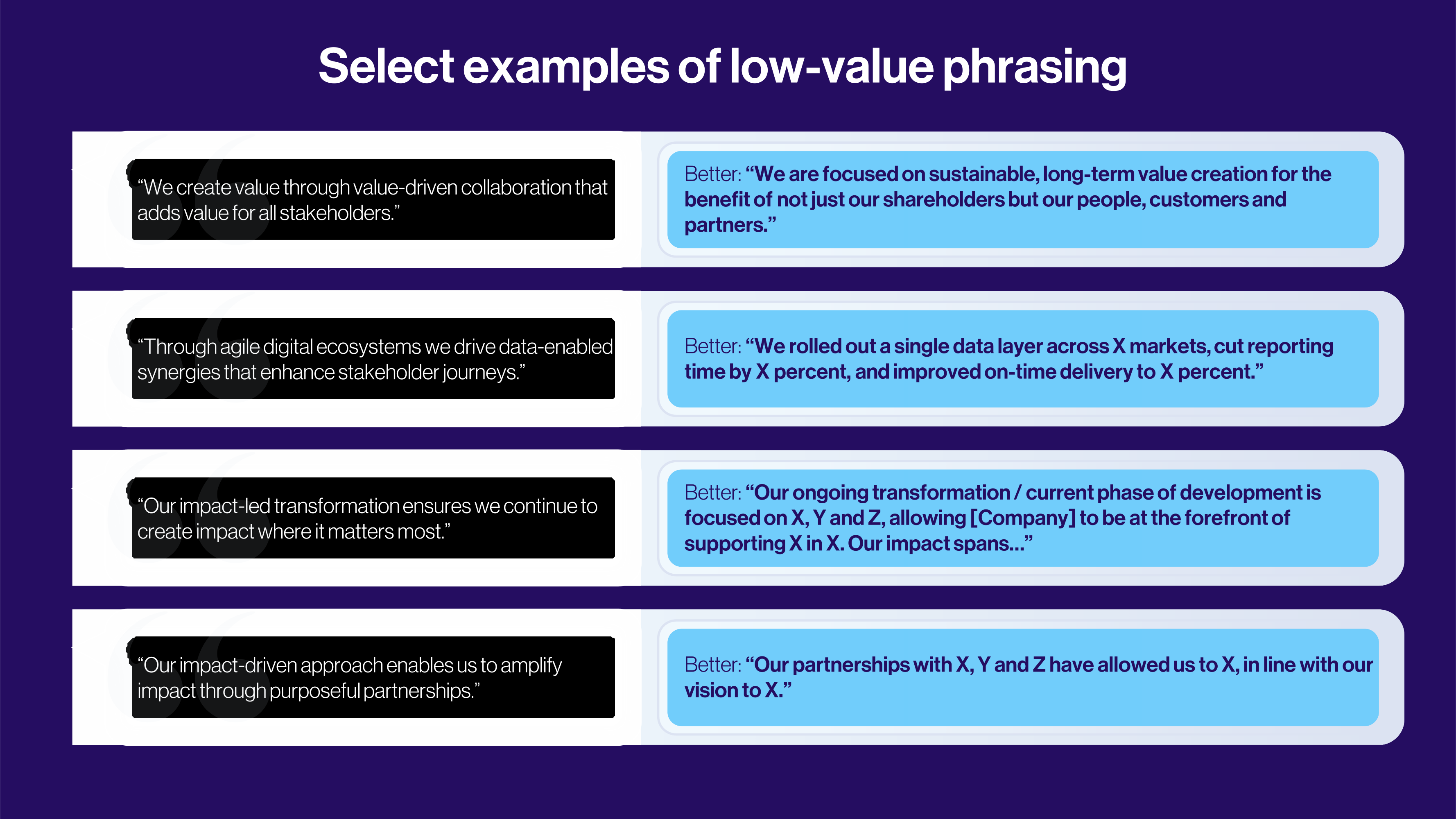
Use of vague superlatives is edging down, yet jargon still creeps in. Terms such as “value creation”, “purpose driven” and “leverage” remain common and ESG modifiers have spread quickly. The weakest sentences stack abstractions without evidence and, although they might read well, they do not help investors to make decisions.
From intent to execution on sustainability
Climate and energy content increased meaningfully across the sample, with more explicit Scope 1 to 3 disclosure, clearer transition pathways and greater use of operational levers. From 2023, biodiversity and circular-economy language also moved up the order. Overall, the centre of gravity has shifted from pledges to delivery detail.
What this means for issuers this season
Investors are looking for plain, verifiable explanations of how strategy turns into outcomes. Your report should make it easy to see the logic of capital allocation, the evidence that the plan is working and the risks that matter most. Three key considerations for this year:
- Use visuals where they carry numbers and logic, not decoration. Build a one-page KPI slate that investors can track year on year.
- Present evidence over assertion and replace claims with tangible, quantifiable measures that demonstrate progress.
- Tie strategic choices to the capital allocation ladder, including triggers that would shift the balance between reinvestment and returns.
Where AI helps, and where it does not
AI is useful for diagnostics: spotting over-used phrases, checking readability and tracking digital engagement with the online report. It should not write the narrative and unchecked use leads to homogenised language that blunts differentiation in an already overcrowded space.
Looking beyond the numbers
Best practice in annual reporting has come a long way and the checklist approach doesn’t cut it anymore. It is increasingly about telling a comprehensive story behind the numbers and providing useful non-financial metrics alongside financials that show investors the bigger picture – how your business creates value over time, how it handles risk and how it interacts with the world around it.
PwC’s latest annual Global Investor Survey found that many investors are already embedding non-financial data in their valuation models – especially around competitive advantage (51%), industry trends (44%) and innovation/R&D (40%) – suggesting a sharp interest in future performance indicators. This points to an appetite for a deeper, distinctive narrative and should guide the way forward on annual reports, which continue to be among the most important investor touchpoints.
Pointers for 2025 annual report drafting
- Define three to five KPIs that map directly to the strategy and carry them consistently through highlights, strategy and MD&A.
- Write capital allocation like a ladder, not a paragraph. State the base case and the triggers that would rebalance it.
- Articulate your sustainability strategy and progress with storytelling that explains how the company will benefit in the long term.
- Continue on the reporting obligations but broaden the narrative to set out the business case.
- Edit leadership letters with evidence. Keep the origin story short and increase space for progress and trade-offs.
- Run an “AI critic” to catch jargon, repeated phrases and readability issues, then hand-edit for tone.
Sign up for our alerts
Get In Touch